Park District Takes Control of Phosphorus, Harmful Algal Blooms with UltraPHOSx 5000
Due to population growth, harmful algal blooms (HABs) are increasingly impacting water bodies worldwide. Cyanobacteria, commonly referred to as blue-green algae, are a primary driver of HABs and can produce cyanotoxins that may irritate skin, damage the liver, and be fatal to wildlife.
As blooms decay, they also consume dissolved oxygen in water, suffocating aquatic life, stressing aquatic ecosystems, and complicating drinking water treatment for utilities.
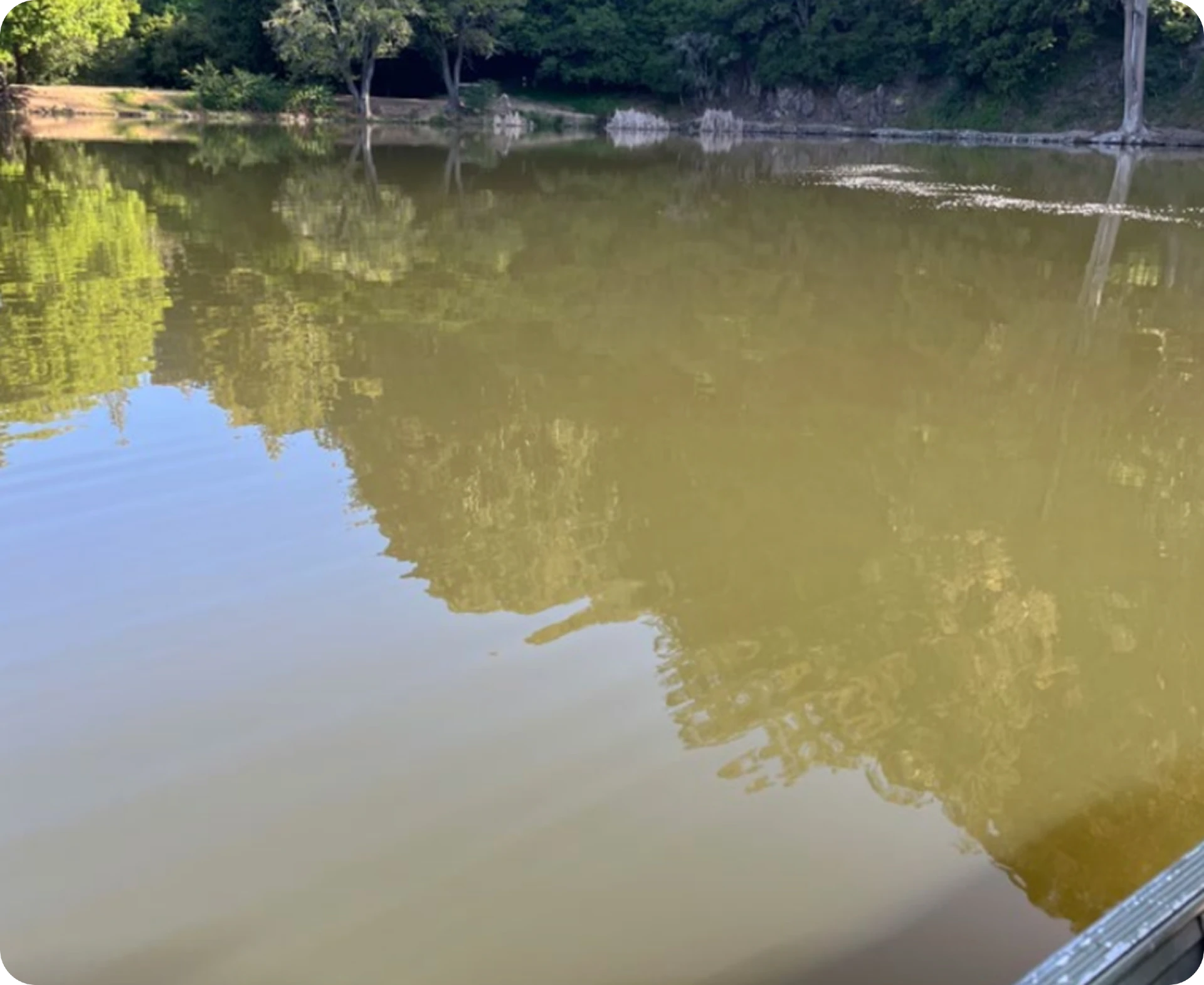
At Lake Anza in Berkeley, California, HABs and their resulting cyanotoxins were making recreational swimming and fishing hazardous for parkgoers. Owned and managed by East Bay Regional Park District (EBRPD), the 9.6-acre reservoir routinely experienced nutrient-rich sediment buildup, eutrophication, and HABs. Between excessive amounts of phosphorus and nitrogen loading, a shallow depth of 45 feet, and the lake’s warm water, Lake Anza became a hot bed for blue-green algae.
EBRPD’s fight with blue-green algae came to a head when Lake Anza was closed for swimming between 2020 to 2022 due to intense amounts of HABs containing hazardous levels of the cyanotoxin microcystin. In 2024, the swimming season ended in June, when historically the season spans from April to September. Phosphorus levels as high as 1 mg/L were identified as a major driver of HAB formation, exceeding concentrations associated with bloom risk by a factor of ten.
EBRPD initially tried oxygenating Lake Anza, which may have contributed to sediment disturbance and higher nutrient loading. The District then applied aluminum sulfate to reduce phosphorus in the water and prevent it from fueling additional algae growth. However, the coagulant caused significant pH swings, consuming alkalinity and harming aquatic life. The product’s acidity also prevented EBRPD staff from applying larger doses, so water quality benefits were shorter-lived.
Targeting Phosphorus Without pH Swings
EBRPD contacted Usalco’s local representative, LakeTech, who arrived on site to learn about the District’s water quality challenges. After jar testing and analysis, it was determined that UltraPHOSx 5000 was the best fit for Lake Anza due to its high basicity and phosphorus binding performance while minimizing impacts on pH and alkalinity relative to conventional alum treatment. The necessary dose of UltraPHOSx was calculated based on the lake’s chemistry, phosphorus concentration, sedimentation depth, alkalinity, and pH.
UltraPHOSx 5000 is engineered to deliver exceptional phosphorus adsorption, making it a powerful solution for mitigating HABs and reducing point-source phosphorus. It requires lower doses than conventional coagulants, minimizes pH adjustment, and prevents phosphorus release under varying conditions. These characteristics reduce the need for multiple chemicals in managing nutrients and sedimentation in lakes. Backed by Usalco’s technical expertise and proven chemistries, UltraPHOSx 5000 helps lake managers achieve stringent nutrient removal goals, safeguarding water quality.
After reviewing the data and considering EBRPD’s budget, the Usalco team recommended an annual UltraPHOSx 5000 application targeting sediment phosphorus release and both internal and external nutrient loading. Annual applications are commonly recommended for lakes like Lake Anza, which have high phosphorus input from winter stormwater inflow.
LakeTech applied UltraPHOSx 5000 to Lake Anza between April 29th to May 1st, 2025.
Return of the Swim Season
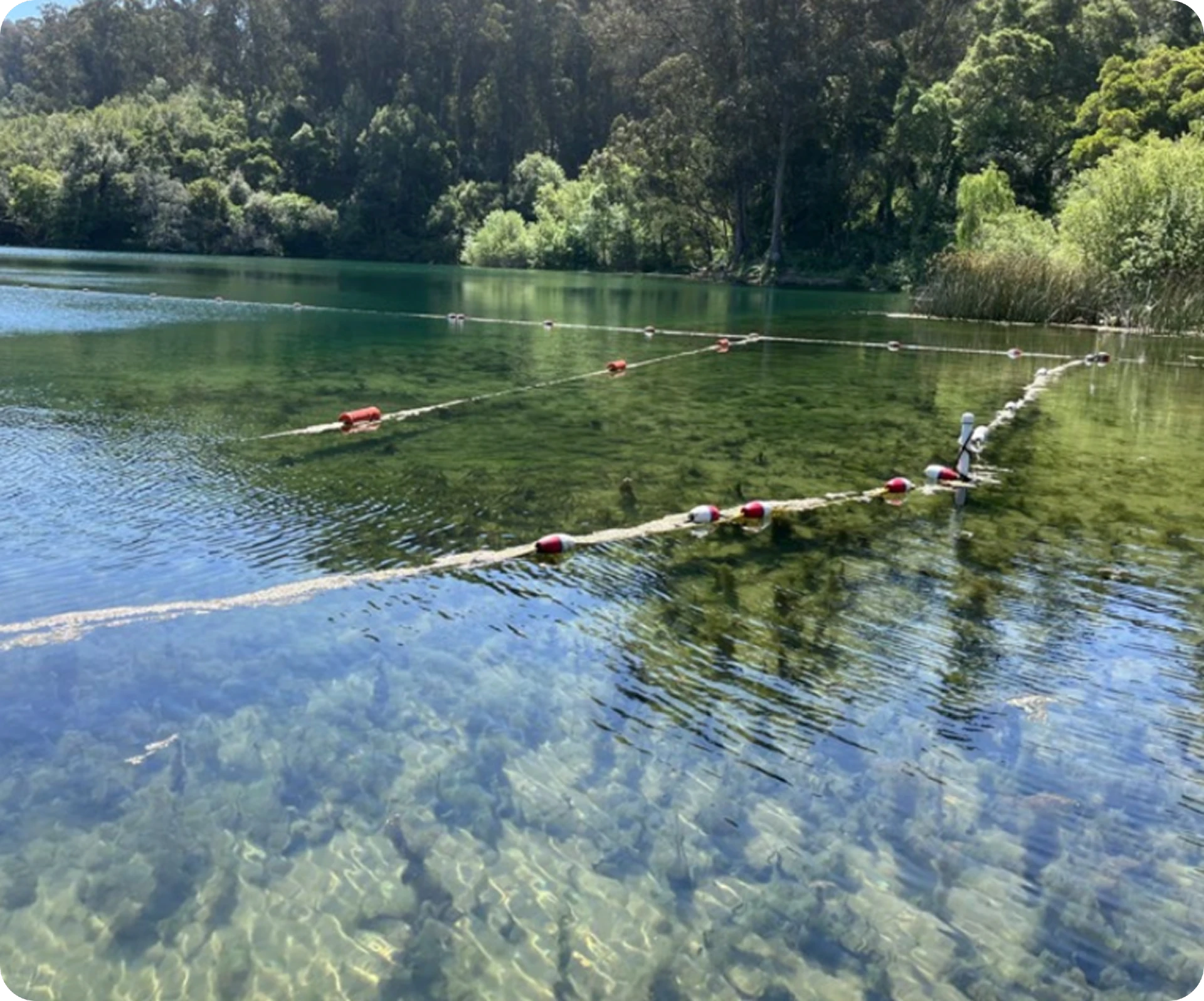
Lake Anza’s clarity improved within a week. Its Secchi depth, which measures how deep light penetrates water and is an indicator of lake clarity and health, was 5.5 feet during application. By May 13th, 2025, the Secchi depth reached 15 feet.
In 2025, phosphorus levels remained substantially lower than historical levels, never exceeding 0.2 mg/L and averaging 0.05 mg/L. Bottom water layer phosphorus concentrations were less than 10% of historical averages, indicating minimal internal phosphorus release from lake sediments during the summer and fall.
With phosphorus under control, the lake experienced reduced cyanotoxin concentrations and shifts in phytoplankton community composition consistent with reduced HAB activity. For the first time since 2018, Lake Anza completed an entire swimming season without HAB-related beach closures in the summer of 2025.
Importantly, these improvements were achieved without major impacts on overall lake chemistry. Lake pH remained within 1 pH unit of pre-treatment conditions throughout the water column, while alkalinity remained stable following treatment, minimizing stress on aquatic life and preventing fish kills and impacts on wildlife.
LakeTech applied a similar dose of UltraPHOSx 5000 for Lake Anza’s 2026 season. Lake sediment will be analyzed annually to determine future dosages, which are expected to decline as the product provides a thick, stable sediment cap over time.
About Usalco
Water powers life. At Usalco, that means we believe only the best will do — cleaner water, smarter systems, and sustainable outcomes. Equipped with the best in water treatment solutions and innovations, Usalco goes farther and works harder to empower others, because when everything depends on water, you can depend on Usalco.

What you need to know.
What causes harmful algal blooms in lakes?
Excess phosphorus is the primary driver of harmful algal blooms (HABs) in most lakes. When phosphorus concentrations climb — often from stormwater runoff, sediment release, or nutrient buildup over time — they fuel the growth of cyanobacteria (blue-green algae), which can produce cyanotoxins that irritate skin, damage the liver, and harm wildlife. Shallow depth and warm water make a lake even more prone to blooms because they hold heat and let light reach the sediment. At Lake Anza in Berkeley, California, phosphorus levels reached 1 mg/L — ten times the concentration associated with bloom risk — which, combined with its 45-foot depth and warm water, led to repeated swimming closures from 2020 to 2022 and again in 2024.
Why doesn't aluminum sulfate (alum) always work for treating phosphorus in lakes?
Alum can bind and reduce phosphorus, but it's acidic, and higher doses often cause pH swings that consume alkalinity and stress aquatic life. That acidity puts a practical ceiling on dosing, which can shorten how long the treatment's benefits last. East Bay Regional Park District ran into this exact issue at Lake Anza: alum reduced phosphorus short-term, but the pH impact limited how aggressively they could treat the lake. They ultimately switched to UltraPHOSx 5000, a phosphorus-binding coagulant engineered to deliver strong phosphorus removal with minimal pH and alkalinity impact.
How quickly can lake water clarity improve after a phosphorus treatment?
Clarity can improve within days to a couple of weeks, depending on the lake's chemistry and the severity of nutrient loading. Secchi depth — a standard measure of how deep light penetrates water — is the typical way to track this. At Lake Anza, Secchi depth was 5.5 feet at the time of a UltraPHOSx 5000 application in late April 2025, and reached 15 feet less than two weeks later.
How long do phosphorus reduction treatments last in a lake?
Well-formulated treatments can hold phosphorus down for a full season or longer, provided the product minimizes internal phosphorus release from sediment and doesn't destabilize the lake's chemistry. At Lake Anza, phosphorus stayed below 0.2 mg/L throughout 2025 (averaging 0.05 mg/L) after treatment with UltraPHOSx 5000, with bottom-layer sediment release under 10% of historical levels. The lake completed a full swimming season without a HAB-related closure — its first since 2018 — while pH stayed within 1 pH unit of pre-treatment levels.
How often do lakes need to be treated to control HABs and phosphorus?
Most lakes with meaningful nutrient input — especially from seasonal stormwater runoff — need annual treatment to keep phosphorus and HAB risk in check. East Bay Regional Park District treats Lake Anza with UltraPHOSx 5000 once a year, timed to address both sediment-driven and external phosphorus loading. Lake managers can expect required dosages to decrease over time as treatments build a stable sediment cap, which is what's projected for Lake Anza going forward.